News Analysis · Eastern Mediterranean / Island of Cyprus
India’s Eastern Mediterranean Policy: Growing Ties with the Republic of Cyprus
India’s growing ties with the Republic of Cyprus reflect its pursuit of European market access, strategic autonomy and closer defence cooperation. The article examines this rapprochement through IMEC and Türkiye–Pakistan relations, while assessing how potential arms transfers could affect Cyprus’s military balance and increase tensions in the Eastern Mediterranean.

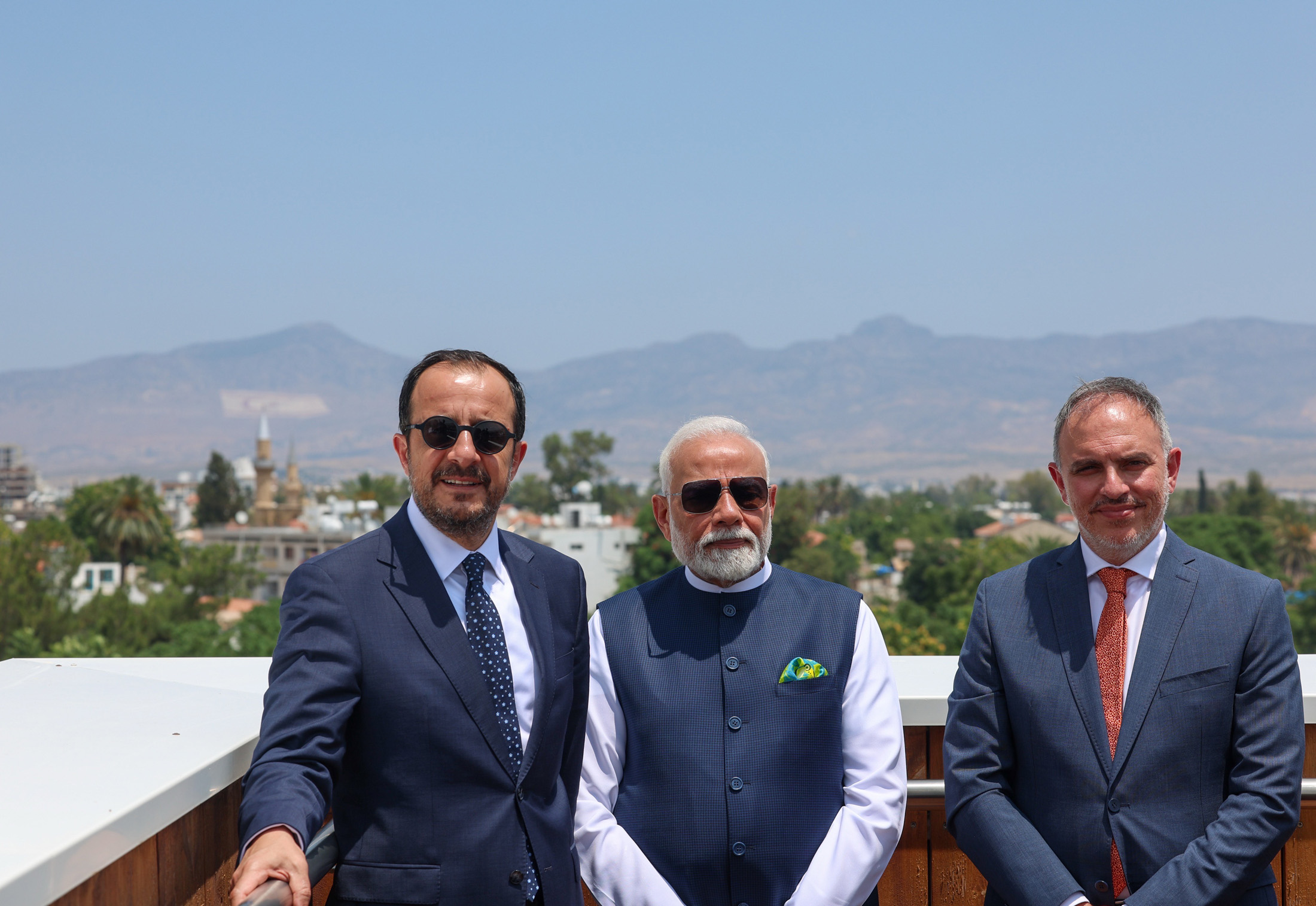
On 12 and 13 October 2026, India’s Defence Secretary Rajesh Kumar Singh paid an official visit to the Republic of Cyprus. During the visit, the Indian delegation met military officials at Mari Naval Base to discuss expanding cooperation in maritime security, joint training and the defence industry. These talks followed the adoption of a five-year defence cooperation roadmap in May 2026. Relations between New Delhi and the Republic of Cyprus gained momentum after 2020. Prime Minister Narendra Modi’s visit to the island on 15–16 June 2025 gave concrete expression to India’s interest in the Eastern Mediterranean.
Several geopolitical and geoeconomic interests lie behind India’s closer ties with the Republic of Cyprus. One of India’s foreign policy goals is to expand its international influence beyond South Asia and become a global power. At a time of growing Chinese economic influence worldwide, New Delhi also seeks to strengthen its access to European markets and offer an alternative to China through the India–Middle East–Europe Economic Corridor (IMEC). Stronger military ties between Türkiye and Pakistan can be seen as another factor in India’s rapprochement with the Republic of Cyprus. This relationship can also be interpreted through Kautilya’s Mandala doctrine. The Republic of Cyprus’s membership of the European Union and its geographical position in the Eastern Mediterranean make it a particularly suitable partner for India.
India’s Global Ambitions and Interests in the Mediterranean
The Extended Neighbourhood vision in Indian foreign policy began to take shape amid the changes of the 1990s. Through the Look East policy, adopted in 1992, India sought to develop institutional relations with ASEAN countries. Under Atal Bihari Vajpayee (1998–2004), the view that India’s foreign policy and security interests should extend beyond its immediate neighbours gained ground. Manmohan Singh’s government continued this approach, considering India’s interests across an area stretching from the Persian Gulf to the South China Sea.
Narendra Modi’s arrival as prime minister in 2014 marked a new phase in India’s ambition to become an international actor beyond South Asia. The Extended Neighbourhood vision broadened through the Act East, Act West and Connect Central Asia policies, as well as India’s approach to the Indo-Pacific. New Delhi sought a greater say in a multipolar world order while preserving its strategic autonomy. India’s G20 presidency in 2023, its continued pursuit of a permanent seat on the UN Security Council and its status as a founding member of BRICS formed the diplomatic dimensions of this ambition.
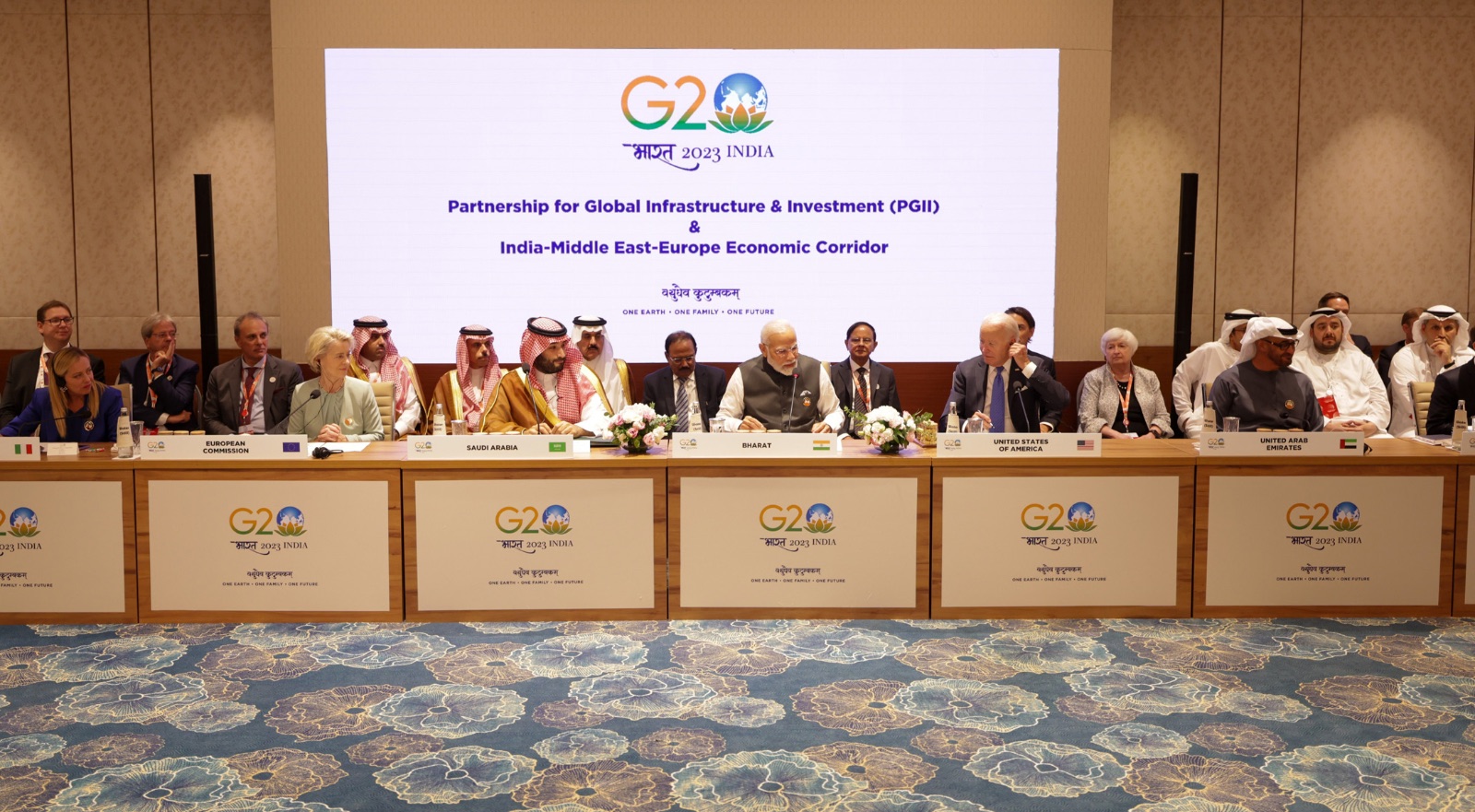
India’s growing energy demand and its desire to develop alternative trade routes to China’s Belt and Road Initiative also encouraged New Delhi to strengthen its relations with Europe and the Eastern Mediterranean. Against a backdrop of growing Chinese influence in global infrastructure investment, the India–Middle East–Europe Economic Corridor (IMEC) was announced in September 2023, with India among its participants.
The corridor aims to improve India’s access to European markets via the Gulf states. The strategic partnership established with Greece in the same year and the development of relations with the Republic of Cyprus can be understood in this context. Both countries’ EU membership and strategic positions in the Eastern Mediterranean offer India significant opportunities for cooperation.
Closer relations between the European Union and India have increased Cyprus’s importance in these ties. On 27 January 2026, the two sides concluded negotiations on a free trade agreement and signed a Security and Defence Partnership. The Republic of Cyprus, which held the rotating presidency of the Council of the EU at the time, continued to develop its relations with India. In May 2026, the two countries elevated their relations to a strategic partnership and adopted a five-year Defence Cooperation Roadmap covering 2026–2031. The Republic of Cyprus thus became one of the partners offering India opportunities for diplomatic, economic and military cooperation in its relations with Europe.
India–Cyprus Relations
The Republic of Cyprus, which gained independence on 16 August 1960, established diplomatic relations with India on 10 February 1962. Their relationship developed within the Non-Aligned Movement and, for many years, was conducted primarily through the United Nations and other international organisations.
Indian External Affairs Minister Subrahmanyam Jaishankar’s visit to Cyprus on 29–31 December 2022 opened a new phase in bilateral relations. A Memorandum of Understanding on Defence and Military Cooperation was signed on 29 December. A Bilateral Defence Cooperation Programme followed on 23 January 2025. Prime Minister Narendra Modi visited the Republic of Cyprus on 15–16 June 2025. In the joint declaration adopted by Modi and President Nikos Christodoulides, the two countries agreed to develop cooperation in the defence industry and maritime security.
Military ties advanced alongside the two countries’ economic interests. India views the Republic of Cyprus as a commercial hub that could facilitate access to the EU market. The two countries aim to expand cooperation particularly in shipping, port services, finance and technology. At a business forum held in Mumbai on 21 May 2026, Christodoulides announced that a Cyprus Trade Centre would be established in the city. Six memorandums of cooperation were also signed at the event between representatives of the two countries’ business communities and relevant organisations.
The military dimension of India’s relations with Cyprus became increasingly visible. On 21 September 2025, the Indian Navy frigate INS Trikand visited Limassol port as part of its Mediterranean deployment. During the visit, the ship’s commanding officer, Captain Sachin Kulkarni, met the Commander of the Cyprus Navy, Commodore Minas Solomonides. Military personnel from the two countries also held professional exchanges.
In 2026, the military partnership became more firmly institutionalised. A new Bilateral Defence Cooperation Programme was signed on 18 February. The two countries then formally elevated their relations to a strategic partnership during Christodoulides’s visit to India on 20–23 May. On 22 May, they announced the completion of the Defence Cooperation Roadmap covering 2026–2031. They agreed to expand cooperation in the defence industry, military training and maritime security. A memorandum of cooperation was also concluded between the Society of Indian Defence Manufacturers (SIDM) and the Cyprus Defence and Space Industry Cluster (CyDSIC).
Military contacts continued after these agreements. India’s Defence Secretary Rajesh Kumar Singh paid an official visit to the Republic of Cyprus on 12–13 October 2026. On 12 October, the Indian delegation visited Mari Naval Base and met the Commander of the Cyprus Navy, Nicolaos Luca. On 13 October, Singh met Defence Minister Vasilis Palmas and National Guard Commander Emmanouil Theodorou. Discussions covered maritime security, the defence industry, military training, cybersecurity and new technologies.
The recent development of India–Cyprus relations shows how the economic and military dimensions of New Delhi’s activities in the Eastern Mediterranean are becoming increasingly intertwined. The Republic of Cyprus offers India opportunities to develop its trade and maritime links with Europe, while Nicosia is building new partnerships with the Indian defence industry and military institutions.
Closer India–Cyprus ties also need to be examined in relation to Türkiye’s growing military cooperation with Pakistan and new regional arrangements such as the Mecca Joint Defence Agreement (MJDA).
Türkiye–Pakistan Relations
India’s military and diplomatic relations with the Republic of Cyprus and Greece cannot be assessed independently of the longstanding partnership between Türkiye and Pakistan, which has strengthened further in recent years. Türkiye’s sustained diplomatic and political support for Pakistan over Kashmir lies at the centre of the disagreements between Ankara and New Delhi. Türkiye regularly raises the Kashmir issue in international forums, particularly the UN General Assembly and the Organisation of Islamic Cooperation (OIC), and openly supports Pakistan’s positions.
The attack in the Pahalgam area of Indian-administered Kashmir on 22 April 2025 reignited tensions between India and Pakistan. On 7 May, New Delhi launched air strikes against Pakistan as part of Operation Sindoor. Pakistan responded on 10 May with Operation Bunyan-ul-Marsoos. In a statement on 9 May, India’s Ministry of Defence said that Pakistan had used Turkish-made Asisguard Songar systems in drone attacks during the night of 8–9 May. These developments drew greater attention in Indian public debate to the growing defence cooperation between Türkiye and Pakistan.
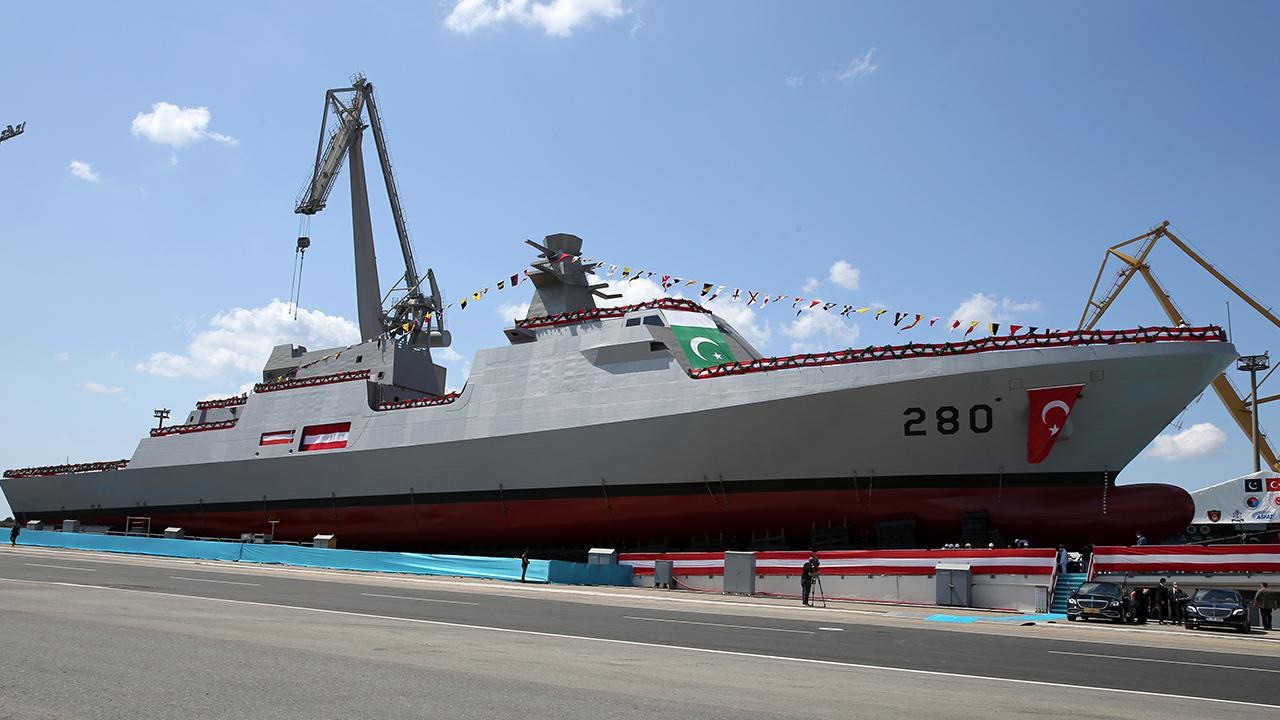
Ankara and Islamabad launched a project to build four MİLGEM corvettes for the Pakistan Navy. The second ship in the programme, PNS Khaibar, was delivered to Pakistan on 20 December 2025. The Turkish and Pakistani navies also held Turgutreis exercises in the Eastern Mediterranean in January 2025 and February 2026. These activities extended their military cooperation beyond South Asia.
The Türkiye–Pakistan strategic partnership is also reflected in global trade and infrastructure projects. In response to the India–Middle East–Europe Economic Corridor (IMEC), announced by India with US and EU support and excluding Türkiye, Ankara had put forward the Iraq Development Road as an alternative. The project would connect the Persian Gulf to Türkiye and Europe through Iraq. Türkiye aims both to maintain its position as a regional logistics hub and to support trade networks linking it with Pakistan through the Gulf.
The signing of the Mecca Joint Defence Agreement between Türkiye, Pakistan and Saudi Arabia on 7 August 2026 marked a new phase in these relations. In response to the pact, which treats an attack on any of the three countries as an attack on all of them, Indian External Affairs Minister S. Jaishankar stressed that New Delhi would pay close attention to this development in its regional security calculations.
Conclusion
Growing relations between India and the Republic of Cyprus show that New Delhi is extending its economic and diplomatic engagement in the Eastern Mediterranean into the military sphere. Although Türkiye–Pakistan defence cooperation is one factor behind this rapprochement, India’s policy cannot be explained solely as a strategy to counterbalance Ankara. Strategic autonomy in international affairs, access to European markets through IMEC, the ambition to expand defence exports under Aatmanirbhar Bharat and Cyprus’s geopolitical position also contribute to this partnership.
The Republic of Cyprus interest in BrahMos supersonic cruise missiles and Nagastra-1 loitering munitions also increases the risks to the military balance on the island. The deployment of BrahMos missiles, in particular, could affect Türkiye’s naval activities in the region and its military planning concerning the Turkish Republic of Northern Cyprus (TRNC), potentially accelerating an arms race. The TRNC’s reliance on Turkish military protection is growing, while efforts to reach a political settlement are becoming more difficult. In 1997, the Republic of Cyprus’s decision to purchase S-300 missiles had already triggered a serious diplomatic crisis with Türkiye.
India’s growing presence does not, on its own, change the balance of power in the Eastern Mediterranean, but the actions of the parties involved are creating conditions for new tensions. What matters most is whether defence agreements translate into actual arms transfers and military activities. If Türkiye and the TRNC perceive the Greek Cypriot side’s arms build-up and its relations with third-party actors in the region as a threat, reciprocal military measures could increase, disrupt the status quo on the island and put regional stability at risk.
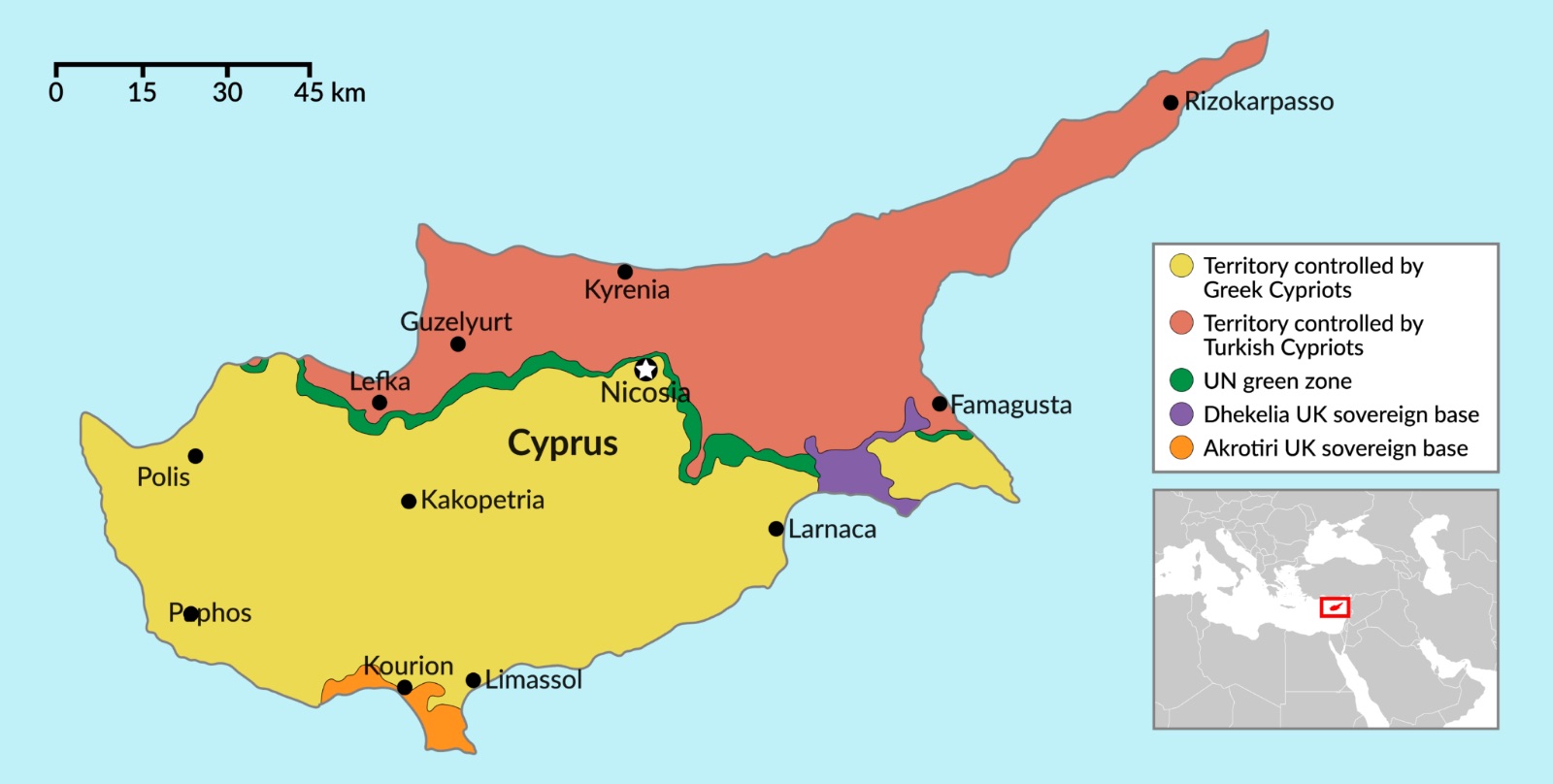
The island of Cyprus gained independence from the United Kingdom in 1960. Under the Treaty of Guarantee, signed in Nicosia, Türkiye, Greece and the United Kingdom became guarantors of the Republic’s independence, territorial integrity and constitutional order. In 1974, following the coup backed by the military junta ruling Greece, Türkiye intervened militarily, invoking its status as a guarantor power, and the island became divided in practice. The Turkish Republic of Northern Cyprus, proclaimed in 1983, is recognised only by Türkiye. The government of the Republic of Cyprus, which in practice administers the south of the island, remains the island’s internationally recognised government. Accordingly, this article uses the designation “Republic of Cyprus” in the context of relations between states. However, the government of the Republic of Cyprus does not exercise effective control over the north of the island.