Research Dossier · France / Türkiye
France and Türkiye: Adversities and Partnerships
“There are no eternal friends and no eternal enemies; there are only eternal interests.” This remark, attributed to Lord Palmerston and delivered before the…

“There are no eternal friends and no eternal enemies; there are only eternal interests.” This remark, attributed to Lord Palmerston and delivered before the House of Commons in Great Britain in 1848, reflects the ambiguous nature of Franco-Turkish relations. Although they are opposed in various areas, the two countries are allies within the same international organization. The Franco-Turkish dialogue goes back to the time of Francis I and Suleiman the Magnificent; throughout history, these relations have known periods of decline as well as high points. Global developments and events affect Franco-Turkish relations. The conflict in Ukraine, the recent war involving the United States, Israel and Iran, and the fall of Bashar al-Assad all influence these relations, because the policy of the Élysée (the French presidential palace) and that of the Presidential Complex (Cumhurbaşkanlığı Külliyesi) do not always align on these new global changes. Today, Paris and Ankara cooperate in various fields despite disagreements, notably in Africa, the Mediterranean and the Caucasus. Cultural exchanges are one of the strengths of this dialogue, thanks to the shared historical heritage and the diaspora.
The Russo-Ukrainian conflict: shared interests defended in different ways
For Paris, there is no doubt that Ukraine’s territorial integrity is non-negotiable, which is reflected in particular in its policy toward Moscow. At the outset of the Russian invasion of Ukraine in February 2022, European countries, including France, put in place a series of sanctions to isolate Russia economically and diplomatically. Among these measures, the most notable were the suspension of the visa facilitation agreement for certain applicants (businesspeople, scientists and academics), signed on 25 May 2006 and in force since 1 June 2007; the freezing of the bank accounts of several Russian millionaires close to President Putin; and the ban on imports of crude oil and petroleum products from Russia.
Behind these sanctions lies, above all, Europe’s dependence on Russian fossil fuels. Before the conflict broke out, France imported 20% of its gas and 5% of its crude oil from Russia. However, it is diversifying its partners, notably by drawing closer to Kazakhstan, Middle Eastern countries and African states. The Russo-Ukrainian conflict has made European countries aware of their dependence on Russia, which is pushing them to seek new partners.
France and Türkiye also both refuse to recognize Moscow’s annexation of Crimea in 2014. Türkiye views this aggression unfavorably, because the Russian presence in Crimea means instability in the Black Sea for neighboring countries. The Russian fleet indeed keeps committing incursions into the territorial waters of Romania, Ukraine, Georgia and Bulgaria, as on 28 October 2026, when Russia was accused of sinking a tanker operated by Greek interests. Yet Türkiye precisely fears this instability and does not want it, in order to protect its trade and its interests.
More interestingly, however, by recognizing the annexation of Crimea, Türkiye would accept the expansion of Russia’s Exclusive Economic Zone (EEZ). This is the reason that leads it to maintain its position. Türkiye is one of the few countries that has preserved its economic and diplomatic ties with both Russia and Ukraine after the events of February 2022. The two powers have grown closer over the past decade, notably through Türkiye’s purchase of the Russian S-400 defense system in 2017 and the Sochi agreements signed on 22 October 2019 between Recep Tayyip Erdoğan, President of Türkiye, and Vladimir Putin, President of Russia, aimed at planning Türkiye’s intervention in northern Syria. If Ankara has not taken a stance like Paris, it is in reality out of self-interest and political pragmatism.
Still, many things set these two countries apart. In Syria, the Kremlin was Bashar al-Assad’s greatest supporter, whereas Türkiye has always maintained its position as a partner of the Syrian National Army (a rebel group opposed to Damascus). For Russia, it was very important to have a hold on Syria because, through the port of Latakia, its fleet has access to the warm seas, which puts it in contact with the busiest and most dynamic seas for world trade. This obsession with warm seas has been at the heart of Russian policy since Peter the Great and Catherine II. By invading Ukraine, the gateway to the Black Sea and therefore an important route to the Mediterranean, Putin is not innovating, he is following a long tradition of political thought.
This adversity is also visible in Libya, where the interests of the two powers clash. For Türkiye, it is therefore essential to recognize Kyiv’s territorial integrity in order to maintain a certain balance of power in the region.
Finally, what makes Türkiye a first-rate partner during this conflict is its geographic assets, its sovereignty over the Bosphorus and Dardanelles straits (granted by the Montreux Convention of 1936), the ability to close access to these straits to warships in wartime, and its maintenance of a permanent dialogue with Moscow. France and Türkiye both want to occupy a central place in the negotiations, which explains the agreement signed on 22 July 2022 in Istanbul between Russia, Ukraine and Türkiye concerning the Black Sea Grain Initiative. Emmanuel Macron has also praised Türkiye’s efforts in hosting the Russian and Ukrainian delegations in Istanbul and its attempts to obtain a truce during 2025.
Franco-Turkish relations put to the test
In Ankara’s policy, the homeland is not limited to the portion of land that the Turks hold, since this idea extends to the sea as well. Türkiye challenges the Greek EEZ in the Aegean Sea and has repeatedly attempted to enter these waters. Greece upholds the position of island projection under the United Nations Convention on the Law of the Sea signed at Montego Bay on 10 December 1982. Athens holds many islands in the Aegean Sea and, in its view, these islands have exactly the same rights as the mainland territory, and therefore have their own EEZ.
However, this principle is rejected by Ankara, because island projection confines Türkiye within itself to Greece’s benefit. This is why Türkiye’s position is different: it adopts the idea of continental projection and has not signed the Convention so as not to have these rules imposed on it in the Aegean Sea. According to this method, Türkiye bases its projection exclusively on the shape of its continental landmass; it considers that the Turkish continental shelf extends beneath the sea and calls for a review of the EEZ delimitations. This view of continental projection is embodied in the doctrine of Mavi Vatan, which translates as “Blue Homeland.” This doctrine allows Türkiye to enlarge its EEZ, but it also stirs patriotic sentiment among the population. By calling it the “Blue Homeland,” the government instills the idea that this zone is as important as Türkiye’s continental territory. This goes beyond a strictly political framework in order to win hearts and minds and rally the opposition to this cause, since the homeland belongs to all the country’s inhabitants.
In May 2026, the Turkish Ministry of National Education changed numerous terms in history and geography, and one of the major changes was the renaming of the Aegean Sea. Indeed, this name strongly evokes Hellenism and Greek culture and, above all, accepting this designation amounts, for Türkiye, to recognizing Greek hegemony over these waters. This is why it changed the name to “Adalar Denizi,” which translates as “Sea of Islands.” This name was used under the Ottoman Empire. By changing the term, Türkiye therefore rejects the sharing of the Aegean Sea and places itself in continuity with the Sublime Porte.
The strongest opposition to this policy pursued by Türkiye comes from France. Several factors lead France to adopt a hostile position toward Ankara and to support Athens. France is one of Greece’s main suppliers of military equipment, and this support is also explained by European solidarity, Athens being a member of the European Union.
France itself also defends the principle of island projection: thanks to its overseas territories, it has the second-largest EEZ in the world (about 10.2 million km²), which explains its position.
However, the most important cause remains the growing rivalry between these two powers in North Africa and the Middle East. For several years, Türkiye has continued to expand its diplomatic network with African powers. Ankara wishes to be represented in the cultural and religious spheres, notably through the construction of mosques and the promotion of the Ottoman heritage, presented today as a guarantor of peace. Its many television series, watched in numerous countries across the African continent, have placed it among the world’s largest exporters of series, particularly historical series featuring great Muslim figures from Turkish history, such as Mehmed: Fetihler Sultanı or the best known, Diriliş: Ertuğrul.
Ankara finances the construction of schools and hospitals, as in Niger with the Niger-Türkiye Friendship Hospital, completed in 2019. On the diplomatic and political level, the logic is simple, Türkiye is multiplying its embassies, concluding agreements with local powers and acting as an intermediary in disputes (as on 11 December 2024, when Türkiye brokered a reconciliation agreement between Somalia and Ethiopia).
Another of Türkiye’s strengths lies in its defense industry. Known for its highly effective combat drones, Türkiye is increasing its exports of military equipment to African countries and, in particular, is taking over former military bases previously held by France following the withdrawal of French troops. France views these changes and the growth of Türkiye’s sphere of influence unfavorably.
Türkiye is concluding new energy agreements with these powers and increasing its trade. In 2015, Ankara’s exports to Africa amounted to 12.5 billion dollars, whereas in 2025 the figure was only 10 billion dollars for the first half of the year alone. In 2015, Türkiye’s imports from Africa stood at 5 billion dollars, while a decade later this figure reaches 11.26 billion dollars. Major French companies are losing contracts to Turkish players and, diplomatically, France is losing influence in this region and must face fierce international competition in Africa.
Moreover, the reasons that lead France to adopt this position are not only economic or diplomatic: history also plays a major role. Since the 16th century, France has maintained a special bond with the Christians of the East. Indeed, Greeks and Armenians lived within the Ottoman Empire under the authority of the sultan. However, from the signing of the first Capitulations (texts granting commercial and legal advantages) between France and the Ottoman Empire in 1536/1569, the King of France became the protector of the Christians of the East, as the historian Ahmet Şimşirgil states in his work KAYI-IV, Ufukların Sultanı Kanuni. Despite changes of regime in France, this position has remained the same toward Greece, Lebanon and Armenia. Paris’s ties with these states are therefore not new, since they rest on a long historical and political process and, far from being entirely rivals, Paris and Ankara cooperate on several stages and in many fields.
Exchanges and partnerships
NATO (the North Atlantic Treaty Organization), created on 4 April 1949, brings together the major Western powers with the initial aim of countering Soviet power. Although close to the United States, Türkiye became a member only in 1952. It was its geographic and strategic position that led it to join the alliance: as Ankara shared a direct border with the USSR, it feared Soviet influence and was particularly vulnerable to a possible attack. To protect themselves against this threat, Turkish leaders entered into negotiations to join NATO.
Today, Türkiye is a major asset for the organization. Located at the crossroads of Europe, Asia and Africa, it occupies a central place in international exchanges. Moreover, it is multiplying its partners by cooperating with the United States as well as with Russia, Japan and Pakistan. It is stepping out of a strictly Western or Asian framework in order to be represented on every diplomatic stage.
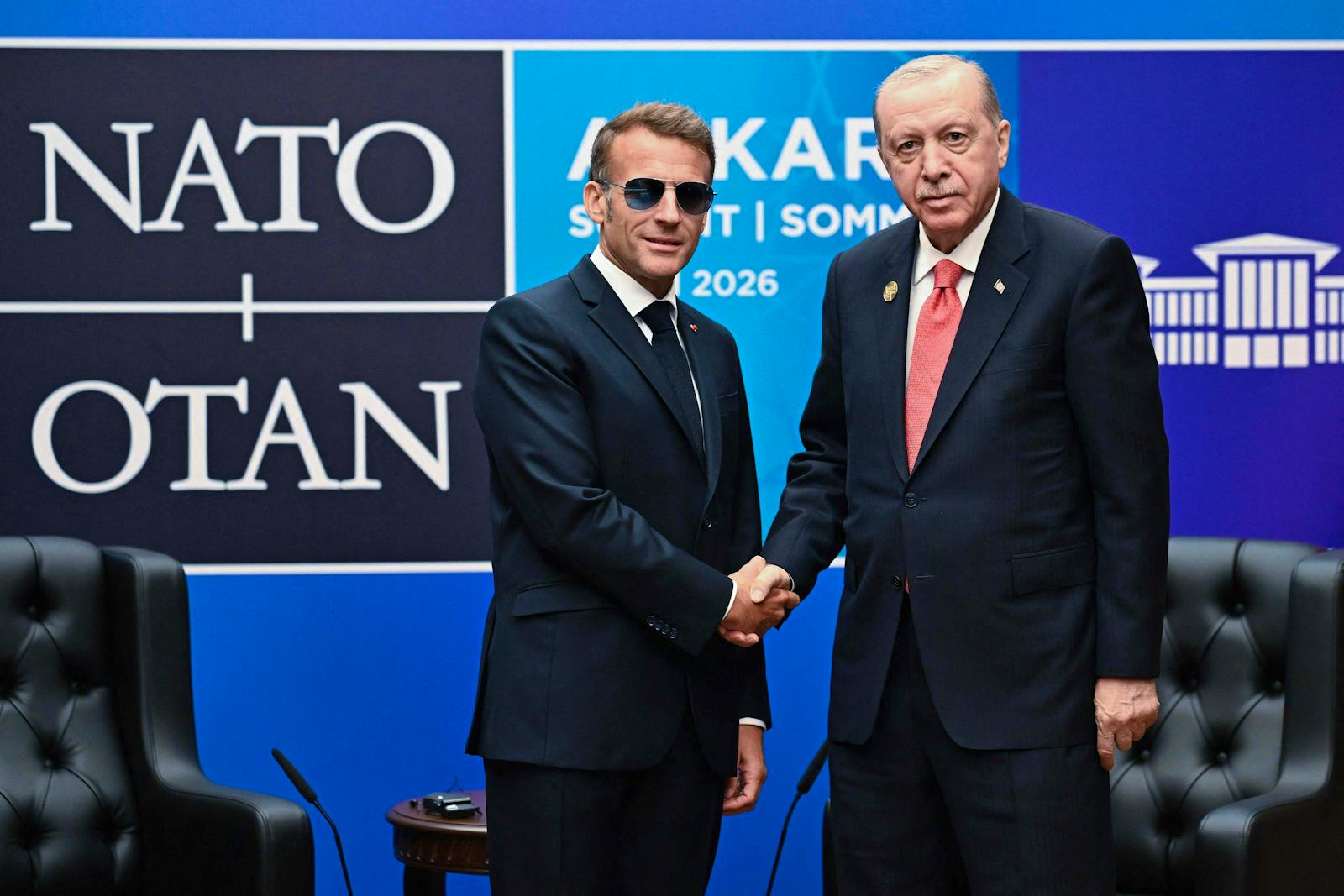
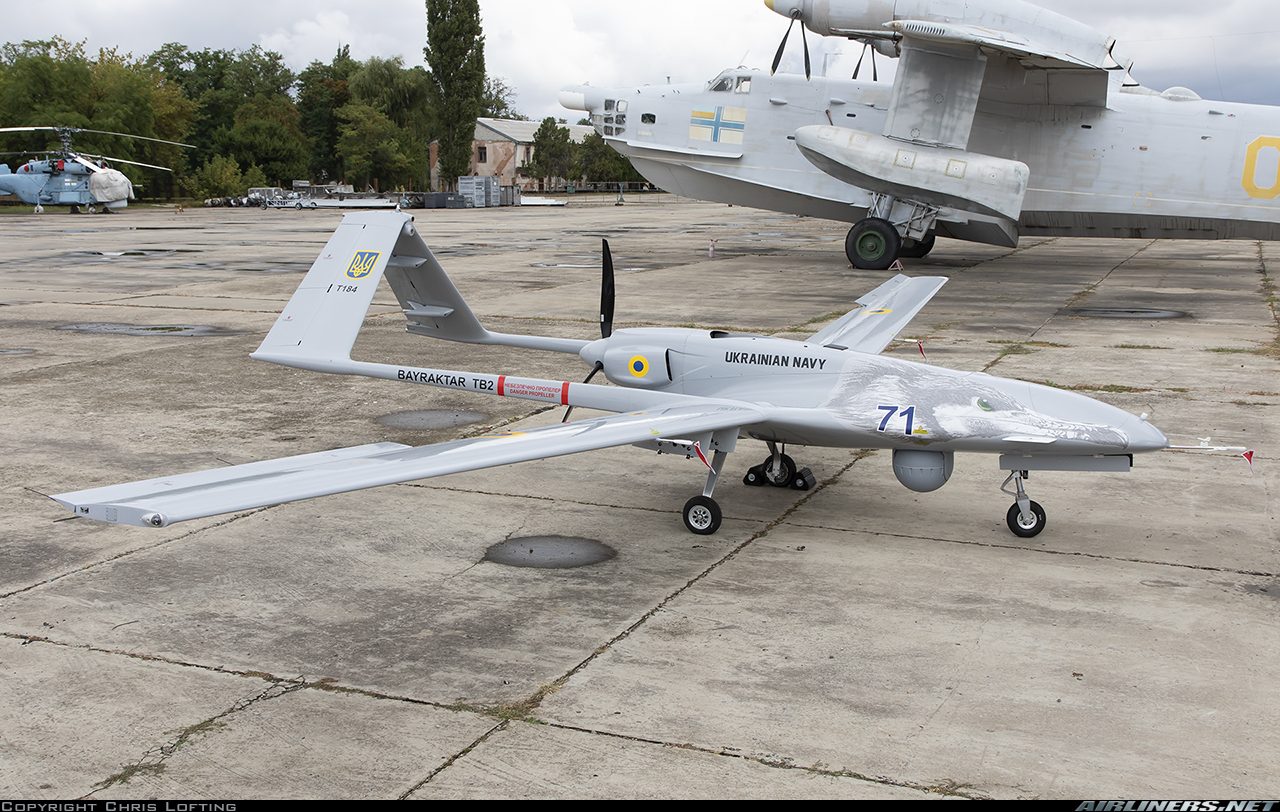
In recent years, Emmanuel Macron and Recep Tayyip Erdoğan have embarked on a diplomatic rapprochement that accelerated at the NATO summit held in Ankara in July 2026. This rapprochement between France and Türkiye reflects a genuine strategic awakening, given that Europe is looking for alternatives to Russia as well as to the United States of Donald Trump, who keeps proclaiming his intention to leave the organization. In terms of defense, Türkiye, which is investing heavily in its arms industry, appears as a credible alternative for France and Europe in the face of the American, Russian or Chinese giants. One major event illustrates this shift: the Safran-Baykar partnership signed on 12 May 2026 sets cooperation on new horizons. Safran, the French flagship of aeronautics, space and defense, has partnered with the Turkish aircraft manufacturer Baykar, known worldwide for its military drones (notably the TB2, heavily used in Ukraine and during the Second Nagorno-Karabakh War). This cooperation allows Türkiye to equip its drones with technologically advanced European components, while offering France a strategic entry point into the fast-growing market for unmanned aircraft.
Economic exchanges are another solid pillar of Franco-Turkish relations. Trade flows have intensified significantly since the pre-Covid period. In 2019, Turkish exports to France amounted to 8.73 billion dollars, compared with 5.9 billion in imports from France. In 2025, the changes are striking: Türkiye imported 12.1 billion dollars’ worth of French goods, while its exports to France reached 11.7 billion dollars. This economic dynamism is driven particularly by the transport sector. Türkiye is a major automotive hub, and its industrial cities such as Bursa and Kocaeli are major car manufacturers. Renault has a factory there, while Citroën and Peugeot are essential partners for Turkish industry. Automobiles make up an important part of these economic exchanges. It should nevertheless be noted that, in aeronautics, exchanges are also undergoing changes, since the Turkish airline Turkish Airlines ordered a total of 355 aircraft from Airbus in 2023, according to the newspaper Anadolu Ajansı. These purchases by Turkish Airlines are part of a desire to break away from American dependence, particularly from the giant Boeing, which is Turkish Airlines’ other major supplier. That said, exchanges are not only military or economic in nature, as there is also a cultural partnership. France has many schools that excel at the Turkish national level, among which those deserving the most attention are the Pierre Loti high school in Istanbul and the Charles de Gaulle French high school in the Turkish capital, which offer the same curriculum as in mainland France, while the Saint-Benoît and Saint-Joseph high schools follow the official Turkish curriculum and teach a certain percentage of subjects in French. The same is true of Galatasaray University, established in 1992 following an agreement signed between French President François Mitterrand and Turkish President Turgut Özal. These institutions are among the most prestigious in Türkiye, which allows France to exert a certain influence and to retain real prestige in educated circles. The French Institute of Türkiye has a large media library and a cinema room where many French films are screened, and above all offers language courses.
Soft power allows France to shine culturally on the international stage. This diplomatic tool enables France to position French as a leading language associated with an idea of prestige. It is also an economic lever, because graduates of these schools can work for French companies while mastering both European and Turkish codes. They are figures in contact with two cultures, which strengthens France’s cultural influence.
Conversely, Turkish schools in France do not exist. Türkiye is represented through cultural centers such as the Yunus Emre Institute in Paris, which offers Turkish language courses as well as lectures aimed at promoting Turkish culture. Türkiye’s strength lies in its diaspora since, according to the Turkish consulates in France, it numbers 800,000 people. This diaspora adopts French codes: children attend public schools and work in France while maintaining close ties with Türkiye. This is a considerable economic asset, since every year this diaspora brings millions, even billions, of euros to Türkiye. This is why it is essential for Ankara to maintain ties with its diaspora abroad, because in addition to its economic weight, it can be a diplomatic lever. In 2021, the Canadian government cancelled arms sales to Türkiye owing to the stance taken and the pressure exerted by the Armenian diaspora, in response to Ankara’s support for Baku during the Nagorno-Karabakh conflict; the diaspora thus becomes a major diplomatic asset when it is large enough.
Mosques attached to the Diyanet (Presidency of Religious Affairs) allow Türkiye to shine culturally in France; they are grouped within DİTİB (the Turkish-Islamic Union for Religious Affairs), which comprises between 270 and 280 places of worship and 265 associations across France. One particularity lies in the appointment of the imams of these mosques, which was carried out directly by Türkiye until 1 December 2024; since then, the law concerning appointments has changed. Imams can no longer come from Türkiye but must be appointed from within the diaspora in France. Even so, this allows Ankara to maintain ties with Turkish believers in France. Ankara’s soft power thus rests on its representation through its diaspora and its religious and cultural centers, which constitute major diplomatic levers.
Conclusion
France and Türkiye are at odds on several points, notably in Africa, the Caucasus and the Mediterranean, where their ambitions and interests clash. Out of European fraternity and historical burden, France adopts a hostile position toward Türkiye in Armenia and in the Aegean Sea. But it has never severed ties with Ankara, which clearly shows that the latter remains a high-ranking partner for the Élysée.
Historically, very strong ties unite them, since diplomatic exchanges go back to the 16th century, and during the Cold War they took another turn as both countries joined NATO. Despite their rivalries, they nevertheless remain important economic partners, notably in the transport and textile trade, and cultural exchanges further nourish the dialogue.
This cultural representation takes place particularly through the presence of cultural centers and schools in France’s case. As for Türkiye, its soft power lies in its institutes and its diaspora. French soft power is rather “institutional,” relying mainly on institutions often supervised by the Ministry of Education or the Ministry of Foreign Affairs, whereas Türkiye’s is a “communitarian” soft power based on strengthening the ties between the country and its diaspora, a link very often made possible through cultural centers and places of worship that serve as bridges. In Ukraine, the interests of the two powers converge to the point of adopting a certain hostility toward Russian action, albeit to different degrees.